
Access California Divorce Records
California keeps divorce records at two main places. The Superior Court in each county holds the full case files with all court papers and the final divorce decree. The California Department of Public Health has basic divorce certificates for cases from 1962 through June 1984. After June 1984, you must get divorce records from the county court where the case was filed. Most counties now offer some form of online case search. You can look up divorce cases by name or case number through county court portals. Some records are free to view online while others need you to pay for copies or make a trip to the courthouse in person.
California Divorce Records Quick Facts
Where California Stores Divorce Records
California Superior Courts hold the main divorce records. Each of the 58 counties has its own Superior Court that handles all family law cases. When someone files for divorce in California, that case goes into the county court system. All the papers get stored at the courthouse. This includes the petition, response, financial disclosures, settlement agreements, and the final judgment. The court clerk keeps these files and can make copies for anyone who asks. Some counties keep older files at off-site storage, which can take extra time to retrieve.
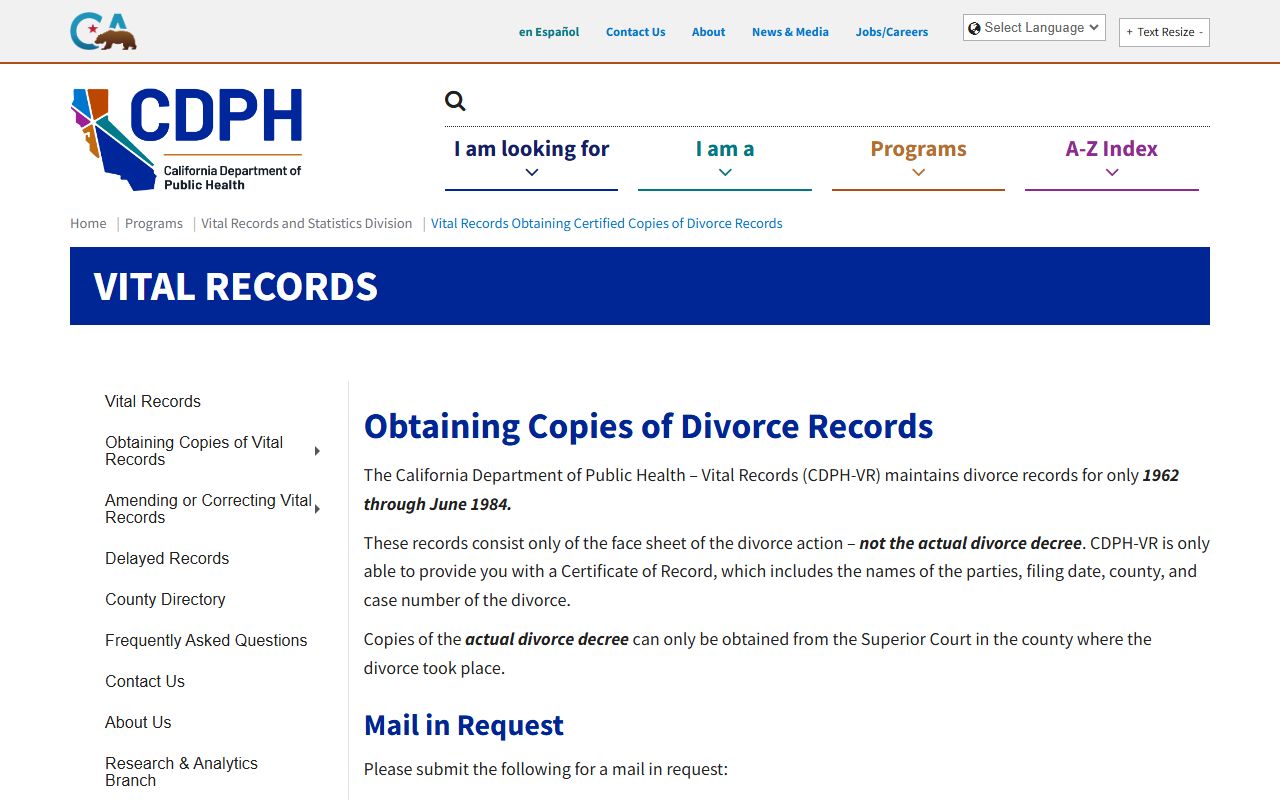
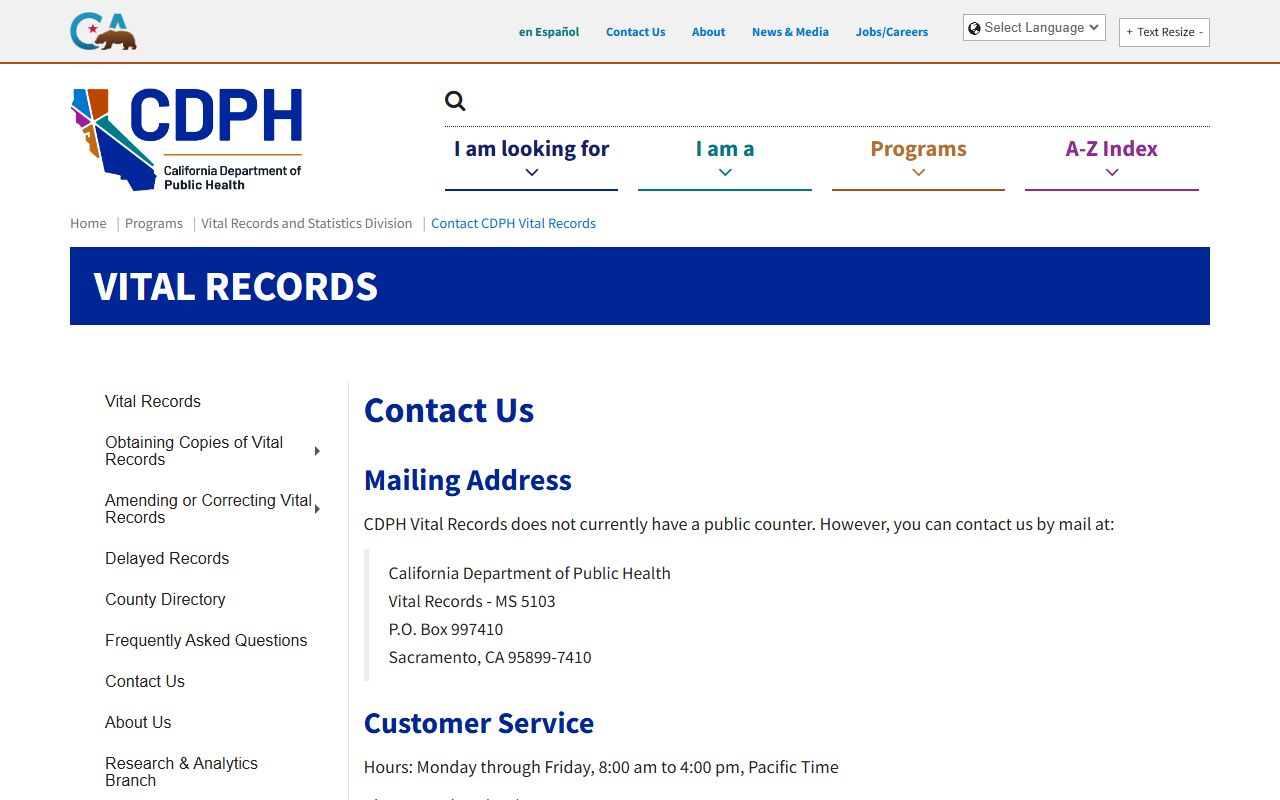
The state health department used to track divorces but stopped in 1984. The California Department of Public Health Vital Records office has a Certificate of Record for divorces from 1962 through June 1984 only. This certificate shows basic facts like the names of both parties, the filing date, the county, and the case number. It does not include the actual divorce decree or any details about property or custody. If your divorce happened during those years, you can request a Certificate of Record from CDPH by mail. After June 1984, CDPH does not have any divorce records at all. You must contact the Superior Court in the county where the divorce took place. The CDPH office is at P.O. Box 997410, Sacramento, CA 95899-7410. You can also visit their website at cdph.ca.gov for more info on how to order a Certificate of Record.
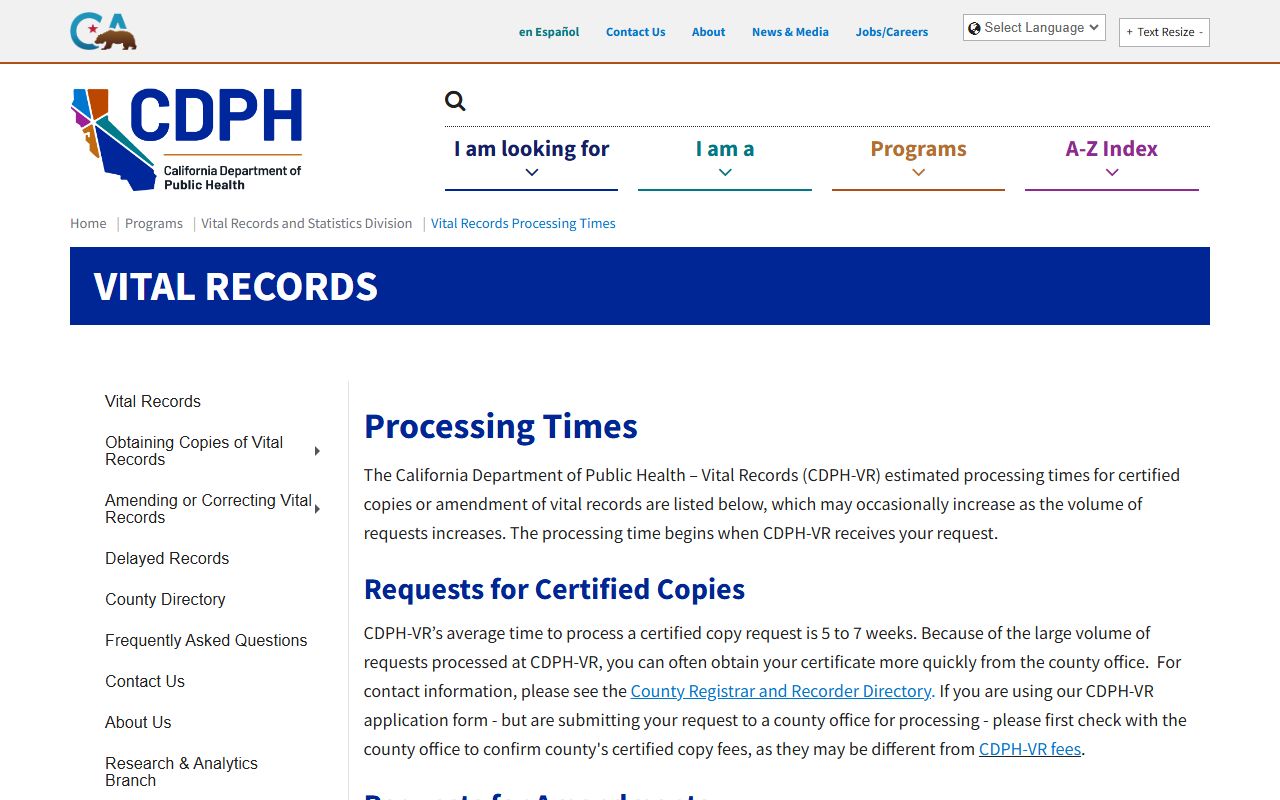
Processing times vary a lot. CDPH says their average time for vital records is five to seven weeks, but they warn that divorce record requests may take over six months. County courts are usually much faster. Many clerks can provide copies within a few days or even the same day if you show up in person. Mail requests to county courts typically take one to four weeks depending on the workload and whether the file is stored off-site. Some counties charge an extra retrieval fee for older files.
How to Search Online
Most California counties now have online case search portals. These tools let you search for divorce cases from home. You type in a name or case number and the system shows you basic case info. Different counties use different systems. Some use Tyler Technologies Odyssey portals. Others use custom platforms. A few small counties still do not have online access at all.
Los Angeles County has the largest system in the state. Their online portal covers family law cases from 1983 to the present. Document images are available starting May 1, 2000. You can search by party name or case number at no charge, but downloading documents costs money. A name search costs $4.75 for guest users or $1.00 for registered users for the first 10 searches. Document downloads cost $1.00 per page for the first five pages, then $0.40 per page after that, with a max charge of $40 per document. Los Angeles County also has a dedicated divorce judgment search portal at lacourt.org/ldosv2 where you can look up dissolution judgments specifically.
San Diego County offers free case searches through their Family ROA portal at roasearch.sdcourt.ca.gov. Orange County uses a family law portal at fampub.occourts.org for public searches. Sacramento County has its case portal at prod-portal-sacramento-ca.journaltech.com. Each county sets its own fees and rules for what you can view online. Some show full document images while others just show a list of filings in the case.
To search most county portals, you need at least one party name. The more info you have, the better. Here is what helps:
- Full first and last name of one spouse
- Approximate year the divorce was filed
- The county where it was filed
- Case number if you have it
If you search by name only, you may get many results. Common names can return dozens of cases. Having the year or case number narrows it down. Most portals let you filter by case type so you can limit results to family law or dissolution cases only.
Types of Divorce Documents
A divorce case creates many types of documents. The main record is the divorce decree, also called the judgment of dissolution. This is the final court order signed by a judge that officially ends the marriage. The judgment includes terms for child custody, child support, spousal support, and division of property and debts. A certified copy of the judgment is what most people need when they have to prove their divorce is final.
The petition is the first paper filed in a divorce case. It starts the case and states what the person filing wants from the divorce. The other spouse then files a response. Both parties must fill out financial disclosure forms that list all their income, assets, and debts. If they reach a settlement, they file a marital settlement agreement. If they go to trial, the court file will have motions, declarations, and hearing transcripts. All of these papers become part of the official court record. You can request copies of any document in the case file from the county clerk.
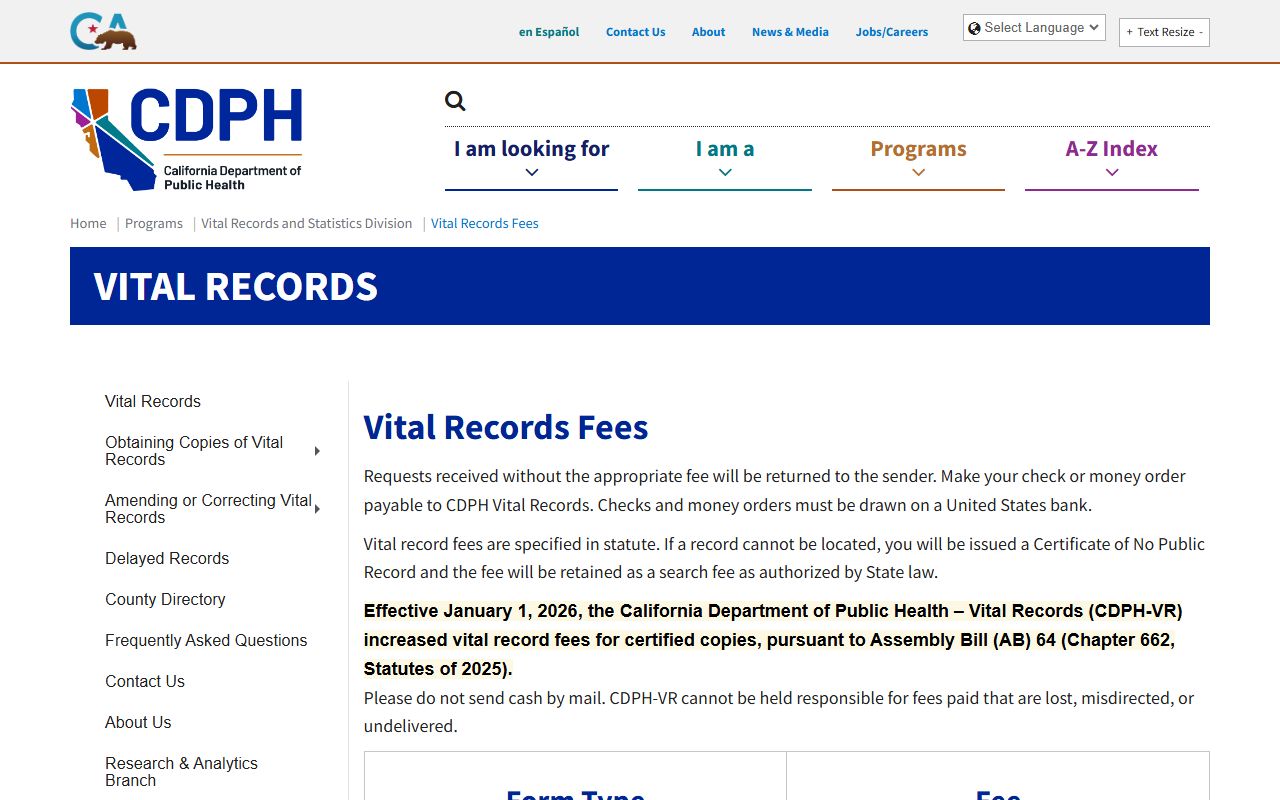
The Certificate of Record from CDPH is different. It is not a court record. It is a vital record that shows a divorce took place. The certificate lists the names of both parties, the date of filing, and the county and case number where the divorce was filed. It does not show any details about the settlement or custody. CDPH only issues these certificates for divorces from 1962 through June 1984. The fee is $18 per copy as of January 2026. This fee goes up from $16 because of a fee increase under Assembly Bill 64.
Divorce Laws in California
California is a no-fault divorce state. You do not have to prove that your spouse did something wrong. The law allows dissolution based on irreconcilable differences or incurable insanity. Irreconcilable differences means the marriage cannot be saved. Most people file under this ground. The court will grant the divorce without asking for proof of fault. California Family Code Section 2310 lists the two grounds for divorce in California.
Residency rules apply before you can file. At least one spouse must have lived in California for six months before filing. That same person must also have lived in the county where they plan to file for at least three months. If you just moved to California, you have to wait. California Family Code Section 2320 sets out these residency requirements. You must state in your petition that you meet the time rules. The court can ask for proof such as a lease, utility bills, or a driver license.
There is a mandatory waiting period after you file. The divorce cannot be finalized until at least six months after the date the other spouse was served with the petition. This rule comes from California Family Code Section 2339. The six-month wait gives both parties time to work out their issues. The court can issue temporary orders during this time for child custody, support, and use of the home. Even if both spouses agree on all terms, the judge cannot sign the final judgment until the six months are up.
California is a community property state. All assets and debts acquired during the marriage belong to both spouses equally. When a couple divorces, community property gets split 50-50 unless they agree to a different division. Separate property stays with the person who owned it before marriage or received it as a gift or inheritance. The court has to classify each asset and debt as community or separate before dividing them. This can get complex when property is mixed or when one spouse claims something is separate but the other disagrees.
Costs for Divorce Records
Fees depend on what you need. If you want a certified copy of a divorce decree, the standard fee is $15 under California Government Code Section 70674. This fee applies in all 58 counties. It includes the certification and the first page. Some clerks also charge $0.50 per page after the first page. If you need plain copies without certification, most clerks charge $0.50 per page. Certification of other documents costs $40 under Government Code Section 70626. Public agencies can get certified copies for $10 instead of $15.
Search fees apply when you do not have a case number. If the clerk has to search for your case by name and it takes more than 10 minutes, they can charge a $15 search fee per Government Code Section 70627. Some counties also charge off-site retrieval fees if your case file is stored at an archive facility. These fees range from $5 to $10 per file and the wait time can be one to three weeks for the clerk to get the file back.
Los Angeles County charges online search and download fees as noted above. Riverside County charges $1 for one name search, $3.50 for five searches, or $5 for 10 searches. Their unlimited plan costs $250 for 30 days. Other counties offer free online searches but charge for document downloads or in-person copies. Always check with the specific county to confirm current fees before you order.
Steps to Request Divorce Records
Start by finding out which county handled the divorce. California has 58 counties and each one keeps its own records. If you know the county, contact that county Superior Court clerk. You can call, visit in person, or check if they accept mail requests. Give them the names of both parties and the approximate year of the divorce. If you have the case number, that makes the search much faster.
Many county clerks have request forms on their websites. Orange County uses form L-0696 for copy requests and form L-0006 for record searches. Marin County has an online request form at forms.office.com/g/bVwSwGQKZk. Check the county court website for their process. Some accept email requests while others require mail or in-person visits only. Include your contact info and explain what documents you need. Say if you want plain copies or certified copies. Send payment with your request if ordering by mail. Most clerks want checks or money orders made out to the county Superior Court.
Wait times vary by county. In-person requests often get handled the same day or within a few days. Mail requests take longer. Most counties process mail orders in one to four weeks. Some warn it may take up to six weeks during busy times. If the file is off-site, add extra time for retrieval. Orange County says mail orders can take 30 to 45 days. Santa Cruz County says standard processing is four weeks. Always plan ahead if you need records by a certain date.
For CDPH Certificate of Record requests, use form VS 113-B available at cdph.ca.gov. Mail the completed form with your payment to CDPH Vital Records, P.O. Box 997410, Sacramento, CA 95899-7410. Remember that CDPH only has records from 1962 through June 1984 and processing may take over six months.
Public Access Rules
Divorce records in California are generally public. Court records are open under state law. Anyone can ask to see a divorce case file. You do not have to be a party to the case. You do not need to give a reason. The clerk must let you inspect the file or order copies.
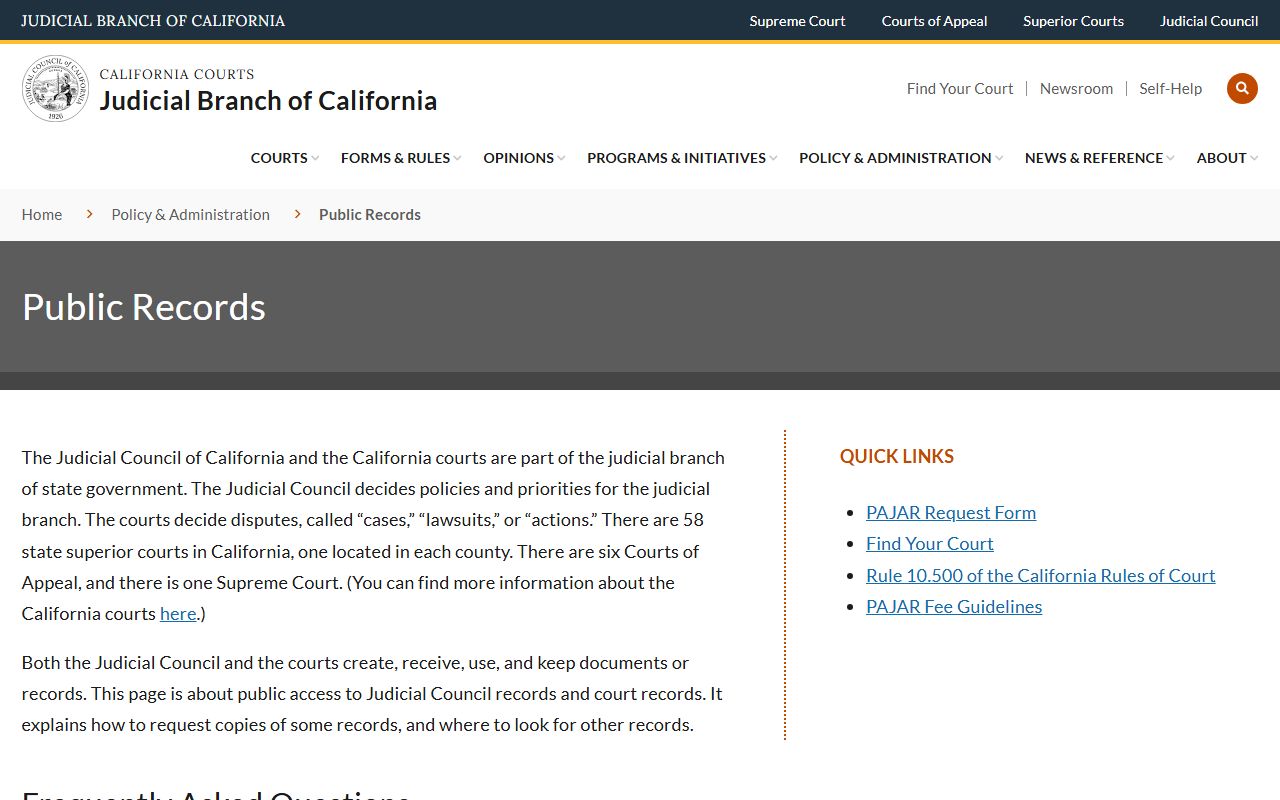
Some limits exist for privacy. Financial account numbers and Social Security numbers get redacted from public copies. Information about minor children may be sealed or limited. California Court Rule 2.503 restricts remote access to certain family law documents. This means some divorce papers cannot be viewed online even if the county has an online portal. You may need to go to the courthouse to see those specific documents in person. A party can also ask the court to seal the entire case file if they show good cause. Sealed cases are not common but they do happen in cases involving domestic violence, threats, or other sensitive issues.
Effective January 1, 2026, Assembly Bill 1524 allows people to take photos of court records at the courthouse. You can use your phone or camera to photograph documents instead of paying for copies. This applies to records you are allowed to see. You still cannot photograph sealed or confidential documents. This new law helps reduce costs for people who need court records but cannot afford copy fees.
Help with Divorce Cases
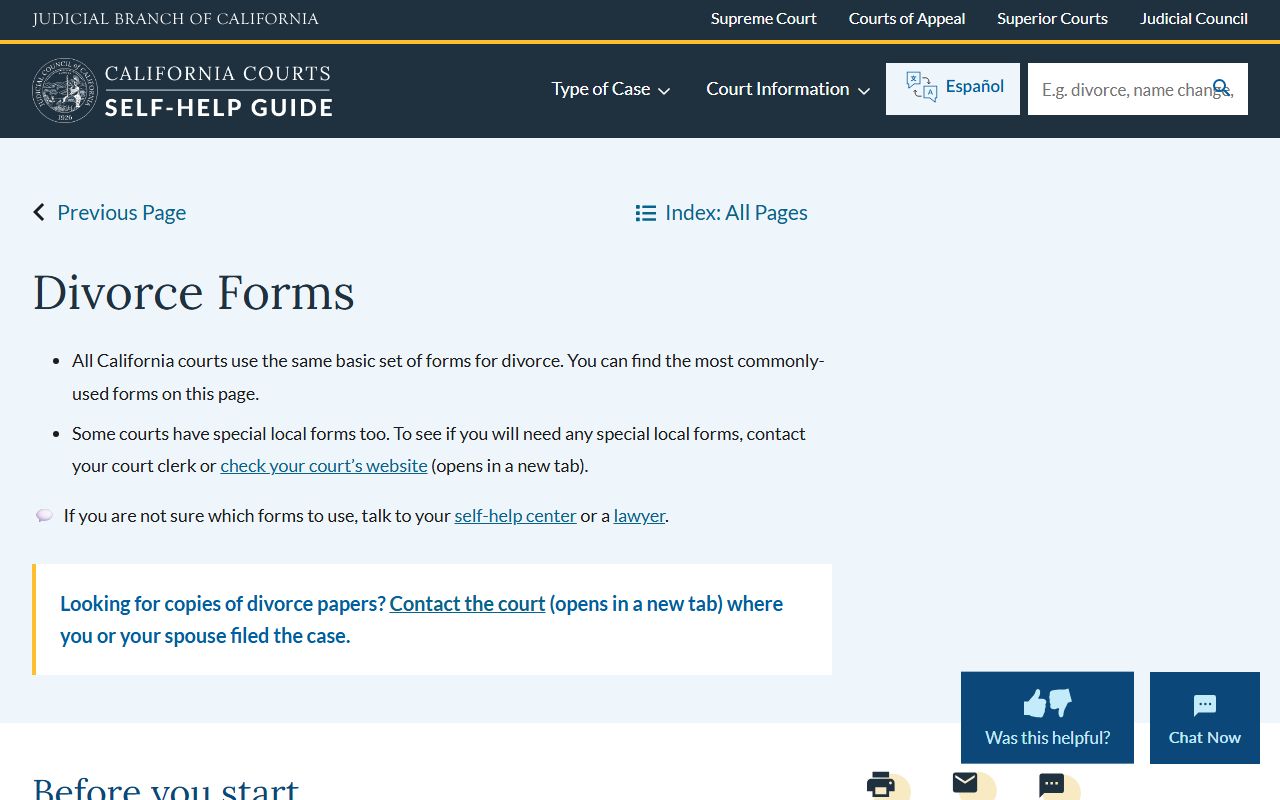
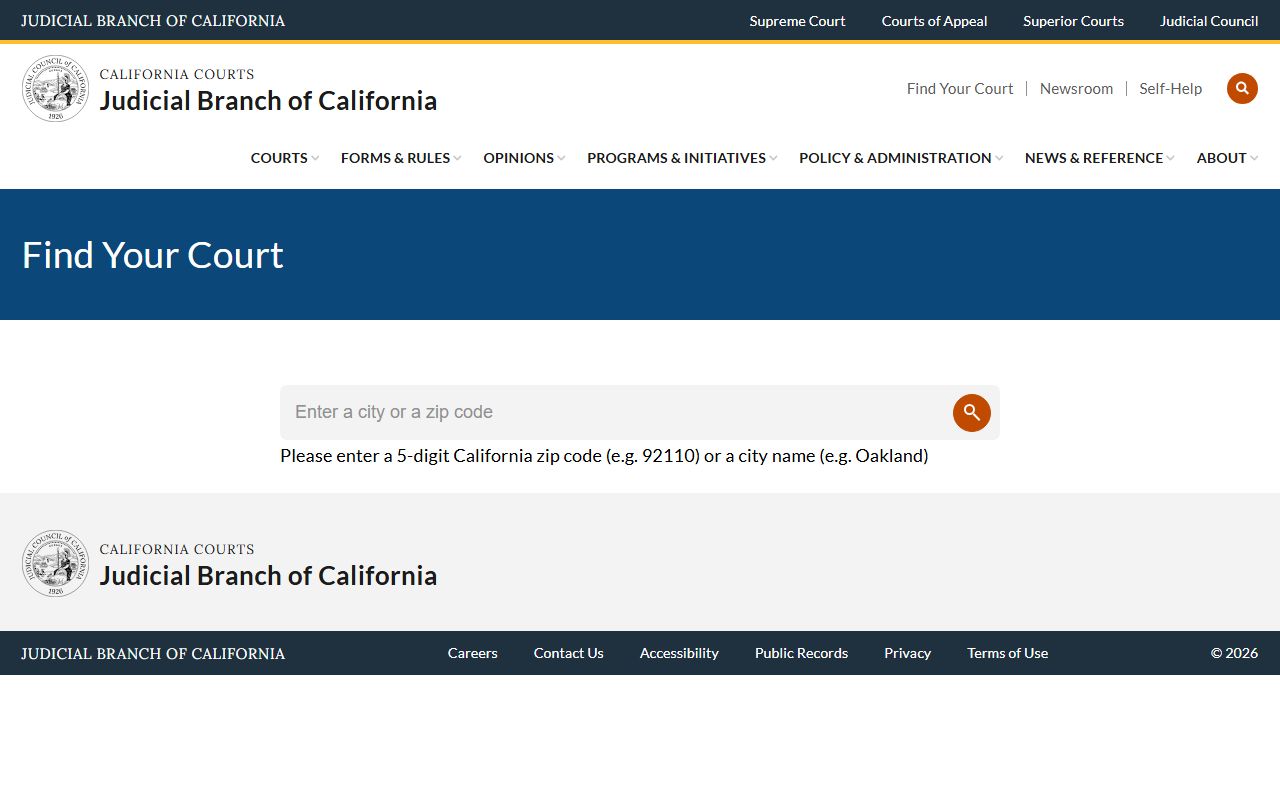
Many California courts have free self-help centers. These centers provide forms, instructions, and basic legal info. Staff can help you fill out forms but they cannot give legal advice. They cannot tell you what to do in your case. Most centers help with divorce, child custody, child support, and domestic violence restraining orders. You can find the self-help center at your local Superior Court. The California Courts website has a directory at courts.ca.gov/find-my-court.
California also has a statewide self-help website at selfhelp.courts.ca.gov. This site lists all the standard divorce forms used in California courts. It explains how to fill them out step by step. The forms are free to download. The site covers starting a divorce, responding to a divorce, and what happens after you file.
If you need a lawyer, the State Bar of California runs a lawyer referral service. Call them at 1-866-442-2529 to get connected with a family law attorney in your area. Legal aid groups also help people with low income. These groups offer free legal help if you qualify based on your income and the type of case. Contact your local legal aid office to ask about services.
Browse by County
Each California county maintains its own divorce records at the Superior Court clerk office. Select a county below to find local contact details and online search portals.
Divorce Records in Major Cities
Residents of major California cities file for divorce at their county Superior Court. Pick a city below to learn about divorce records in that area.