
San Diego Divorce Records Search
Divorce records for San Diego residents are stored at the San Diego County Superior Court. The Central Courthouse at 1100 Union Street handles family law cases for the city. When someone in San Diego files for divorce, that case becomes part of the county court system. The Family Business Office on the fourth floor processes divorce filings and maintains records. You can search for divorce cases online through the county's public portals. Two systems are available: the Family ROA portal and the Court Index search. Both show basic case information but do not allow you to download full documents due to California privacy rules. To get certified copies of divorce decrees or other court records, you need to contact the clerk's office, submit a request by mail, or visit the courthouse in person.
San Diego Divorce Records Overview
Where San Diego Divorces Are Filed
San Diego is part of San Diego County for all court matters. The county Superior Court handles divorce and family law cases. The main courthouse for family law is the Central Courthouse at 1100 Union Street, San Diego, CA 92101. The Family Business Office is in Room 450 on the fourth floor. Call 619-450-7888 for assistance. Hours are 8:30 a.m. to 4:00 p.m. on weekdays. For older records, visit the 14th floor. For general records questions, call Central Records at 619-450-7361.
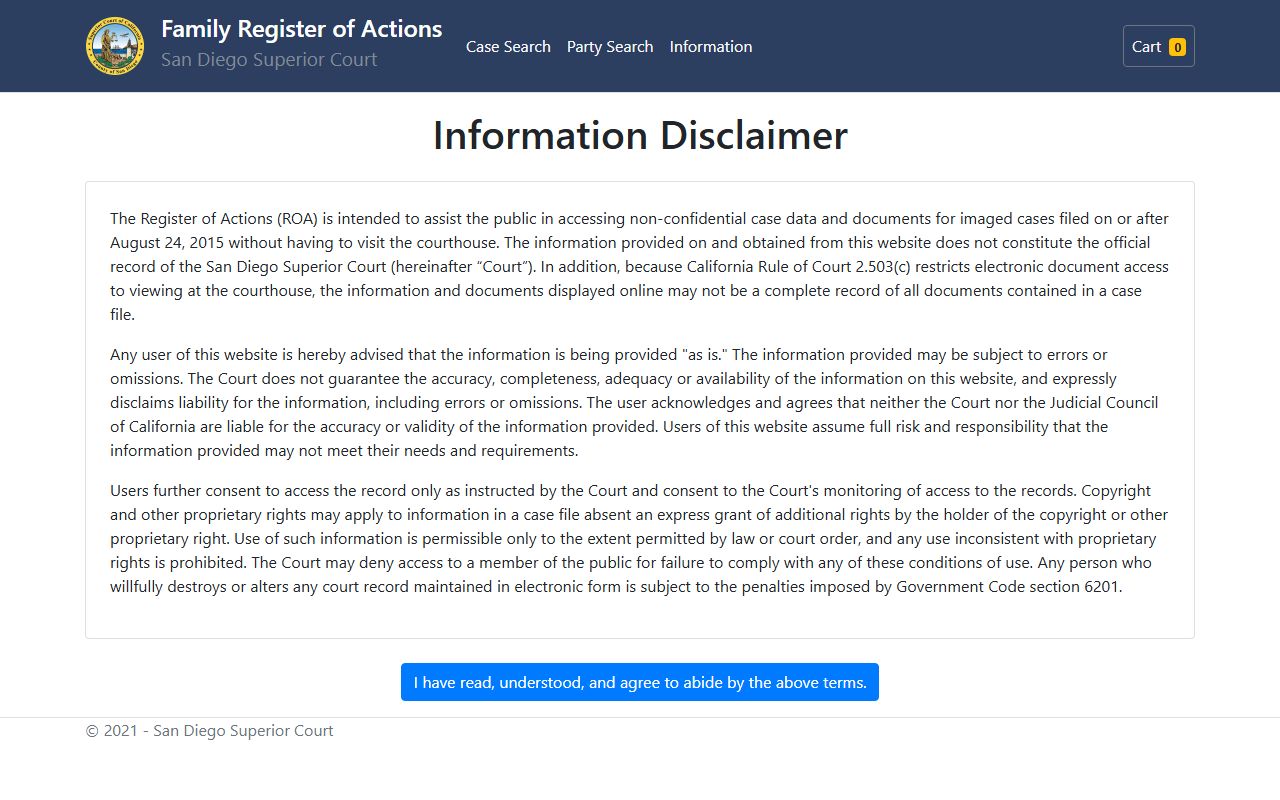
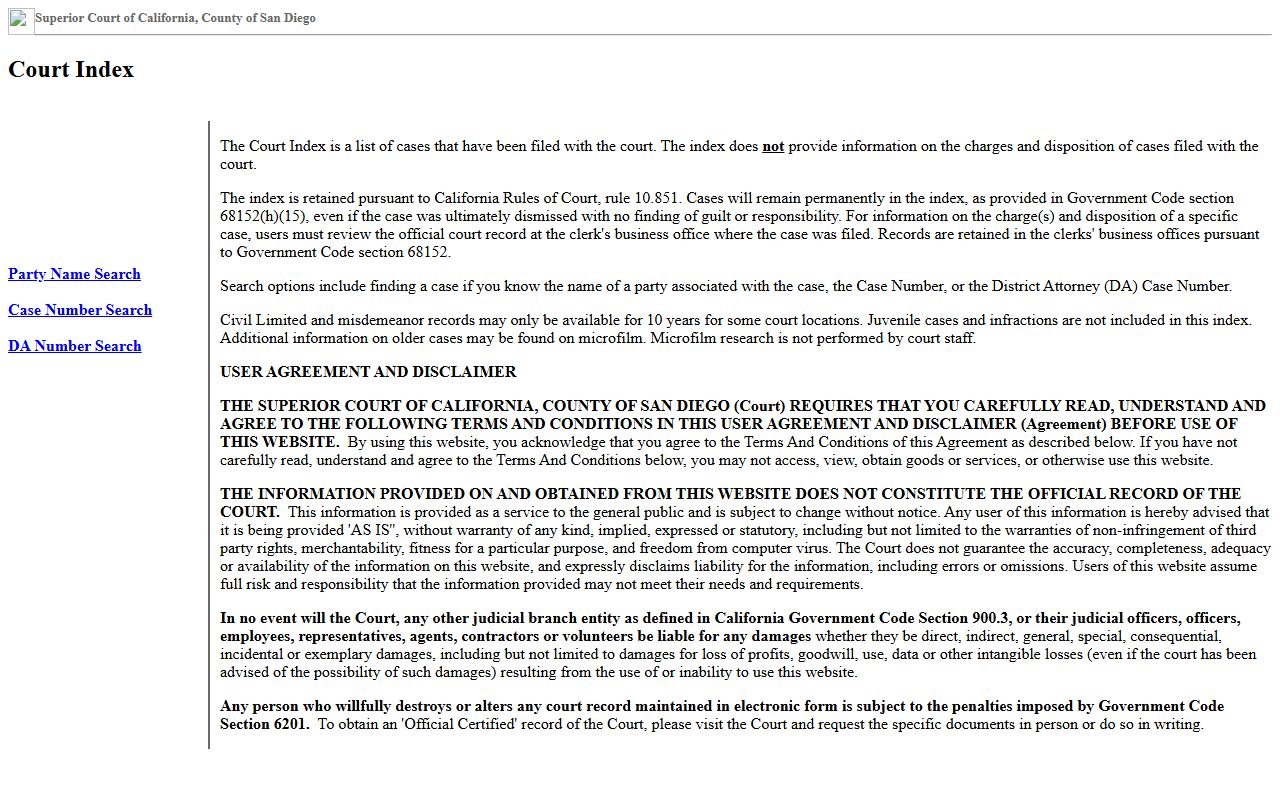
San Diego County has two online portals for searching divorce cases. The Family ROA portal at roasearch.sdcourt.ca.gov shows family law records of appearance. The Court Index at courtindex.sdcourt.ca.gov searches all case types. Both systems are free to use. You can search by party name or case number. The portals show basic case information including parties, filing dates, and document lists. However, you cannot download the actual documents online due to privacy protections in California Rules of Court 2.503.
San Diego County charges standard fees for divorce records. A certified copy of a divorce decree costs $15 under Government Code Section 70674. The fee includes the entire judgment. For other documents, certification costs $40 plus $0.50 per page for copies. For cases filed on or after August 24, 2015, you can purchase some documents online. Older cases require in-person or mail requests.
Filing for Divorce in San Diego
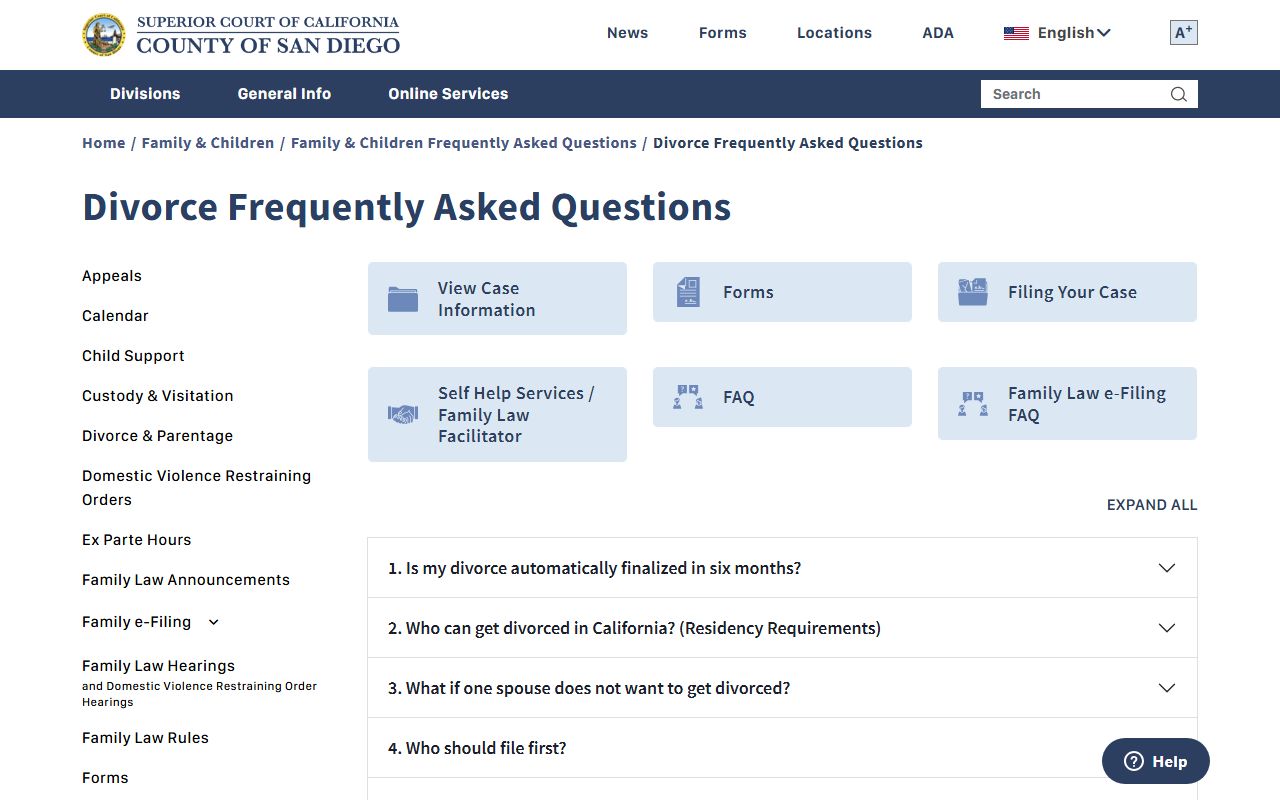
To file for divorce in San Diego, you must meet California's residency requirements. California Family Code Section 2320 requires you to live in the state for six months and in San Diego County for three months before filing. Once you meet residency, you can file at the Central Courthouse or other San Diego County locations. The filing fee is $435 to $450. If you cannot afford the fee, you can request a waiver using form FW-001.
California uses the same divorce forms statewide. Form FL-100 is the Petition for Dissolution of Marriage. Form FL-110 is the Summons. After filing, you serve these on your spouse. Your spouse has 30 days to file a Response using form FL-120. If your marriage is short, you have no children, limited assets, and both spouses agree, you might qualify for summary dissolution using form FL-700.
All divorces require financial disclosures. Both parties must complete form FL-140, the Declaration of Disclosure, and form FL-142, the Schedule of Assets and Debts. These forms show income, expenses, property, and debts. You serve these on the other party even if you agree on how to divide things. The court uses this information to approve settlements or make decisions about property and support.
California law requires a six-month waiting period. Your divorce cannot be final until at least six months after your spouse was served with the Summons and Petition. This is per Family Code Section 2339. Even if you file an uncontested case and agree on everything, the court will not sign the final judgment until six months pass. Most divorces take longer due to paperwork, negotiations, or court schedules. Once the judgment is signed, it becomes a permanent public record.
How to Obtain Divorce Records
To get a copy of a San Diego divorce decree, you can visit the Central Courthouse at 1100 Union Street. Go to the Family Business Office in Room 450 on the fourth floor. Bring photo ID and the case number if you have it. If you do not know the case number, provide both party names and the year the divorce was filed. The clerk can search for the case. For recent cases, you may get copies the same day. Older files may take longer to retrieve.
Mail requests are accepted. Write to San Diego County Superior Court, Family Business Office, 1100 Union Street, Room 450, San Diego, CA 92101. Include the case number or the names of both parties and the approximate year of the divorce. Send a check or money order for $15 payable to San Diego Superior Court for a certified divorce decree. Add fees for any other documents you need. Provide your return address and a phone number. Processing time varies from one to four weeks depending on the court's workload.
For cases filed on or after August 24, 2015, you can purchase some records online through the county portal. Older cases require contact with the clerk. Only certain people can get divorce records. The two parties in the case can always obtain their own records. Attorneys representing either side can get copies. Others may need to show a legal interest or provide a court order. The clerk will verify your identity to protect sensitive information.
Legal Assistance in San Diego
San Diego County Superior Court offers free help through its Family Law Facilitator program. The facilitator can answer questions about forms, explain procedures, and review paperwork. They cannot give legal advice or represent you in court, but they can help you understand the process. Call the Family Business Office at 619-450-7888 and ask about facilitator services.
Legal Aid Society of San Diego provides free legal help to low-income residents. They handle family law cases including divorce, custody, and support. To see if you qualify, visit lassd.org or call their office for an intake appointment. They can assist with paperwork, negotiations, and court representation if you meet income guidelines.
The San Diego County Bar Association has a lawyer referral service. They can connect you with local attorneys who practice family law. Many lawyers offer reduced-rate initial consultations. You can hire a lawyer for your entire case or use limited-scope representation where the lawyer handles specific tasks while you do the rest yourself.
The California Courts Self-Help website at selfhelp.courts.ca.gov has comprehensive guides for every step of the divorce process. You can find instructions on filing, serving papers, responding to petitions, and attending hearings. All divorce forms are available for free download. The site has videos and FAQs that explain California family law in detail.
Additional Information
For divorces that occurred between 1962 and June 1984, the California Department of Public Health has a Certificate of Record. This is not the actual divorce decree but a document showing the divorce happened. It includes names, county, date, and case number. The fee is $18 and processing can take many months. CDPH does not have records after June 1984. Get the application at cdph.ca.gov.
San Diego County has other courthouse locations besides the Central Courthouse. The county operates facilities in El Cajon, Vista, and South County. If your case was filed at one of these locations, you may need to contact that specific courthouse for records. The online portals show all cases in the county regardless of filing location.
After your divorce is final, you may need to update records with various agencies. If you changed your name, notify the Social Security Administration and the DMV. Update bank accounts, insurance policies, credit cards, and property titles. The court does not automatically send your decree to these agencies. You must provide certified copies yourself. It helps to get several certified copies when you first order your decree.
San Diego County keeps divorce records permanently. Even very old cases remain on file. If you need a divorce record from many years ago, contact the court and provide as much information as you can. The clerk can search historical records, though older files may be in storage and take extra time to retrieve.