
Richmond Divorce Records Search
All divorce records for Richmond residents are held by the Contra Costa County Superior Court. The court has jurisdiction over every family law case filed in the city. When someone in Richmond files for divorce, that petition goes to the county court system. The main courthouse for family law is in Martinez at 725 Court Street. You can search for divorce cases by name or case number through the court's online portal. The system shows basic case data but limits access to full documents. To get a certified divorce decree or other filings, you need to contact the clerk's office or visit the courthouse in person. Most records stay on file permanently, though older cases may be in off-site storage.
Richmond Divorce Records Quick Facts
Where Richmond Divorces Are Filed
Richmond falls under Contra Costa County court jurisdiction. The county Superior Court handles all divorce filings from Richmond and other cities in the area. The main courthouse is at 725 Court Street, Room 103, in Martinez. You can reach the clerk's office at 925-608-1000. Hours are 8:00 a.m. to 4:00 p.m. on weekdays. The courthouse processes thousands of family law cases each year, including divorces, legal separations, custody disputes, and domestic partnerships.
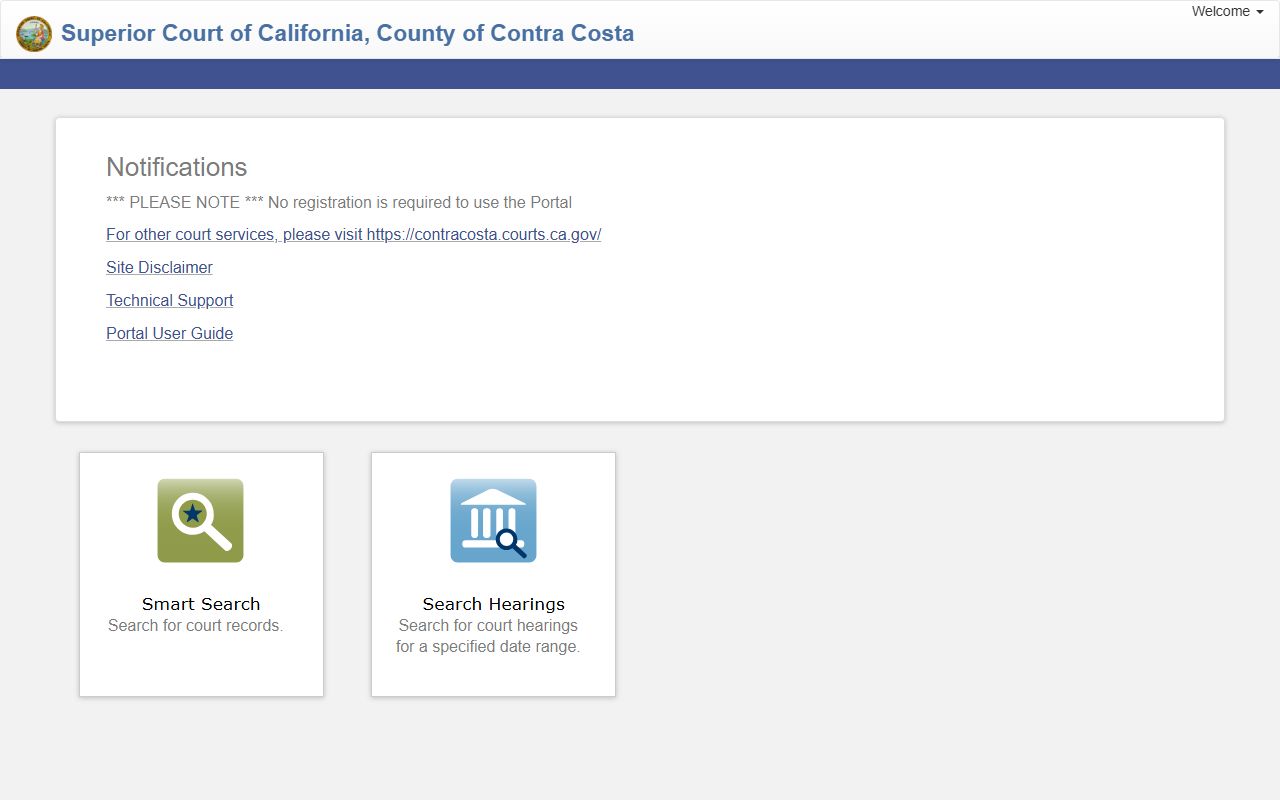
Contra Costa County has an online case portal at odyportal.cc-courts.org/portal. This Odyssey system lets you search by party name or case number. The search is free. You can see a list of filings in the case and check the status of pending matters. The portal shows when documents were filed and what type they are. However, due to California Rules of Court 2.503, most family law documents cannot be viewed remotely. The portal will show the docket but not let you download divorce decrees, financial disclosures, or settlement agreements. For those records, contact the clerk or go to the courthouse.
Fees for divorce records in Contra Costa County follow state law. A certified copy of a divorce judgment costs $15 under Government Code 70674. That fee includes all pages of the judgment. If you want other documents certified, the court charges $40 for certification plus $0.50 per page for copies. Cash, checks, and money orders are accepted at the courthouse. Some court services may accept credit cards with a processing fee added on.
Starting a Divorce in Richmond
To file for divorce in Richmond, you must meet California's residency rules. You need to live in the state for six months and in Contra Costa County for three months before you can file. These requirements are in California Family Code Section 2320. Once you meet residency, you can start your case at the Martinez courthouse. The filing fee is $435 to $450. If you cannot pay, apply for a fee waiver using form FW-001.
All California divorce cases use the same statewide forms. Form FL-100 is the Petition for Dissolution of Marriage. Form FL-110 is the Summons. Together, these start the case. After filing, you must serve copies on your spouse. The spouse then has 30 days to file a Response on form FL-120. If your marriage is short, you have no children, limited assets, and both spouses agree, you might qualify for summary dissolution using form FL-700. This is a simpler process with less paperwork.
Every divorce in California requires financial disclosures. Both parties must complete form FL-140, the Declaration of Disclosure, and form FL-142, the Schedule of Assets and Debts. These forms list all income, expenses, property, and debts. You must serve these on the other party even if you agree on how to divide things. The court needs this information to approve the settlement or make orders about property and support.
California has a mandatory six-month waiting period. The divorce cannot be finalized until six months from the date the Summons and Petition were served on the other spouse. This rule is in Family Code Section 2339. Even if you file an uncontested case and agree on everything, the court will not sign the final judgment until the six months pass. Most cases take longer due to paperwork, negotiations, or court schedules. Once the judgment is signed, it becomes a permanent public record.
Getting Copies of Divorce Records
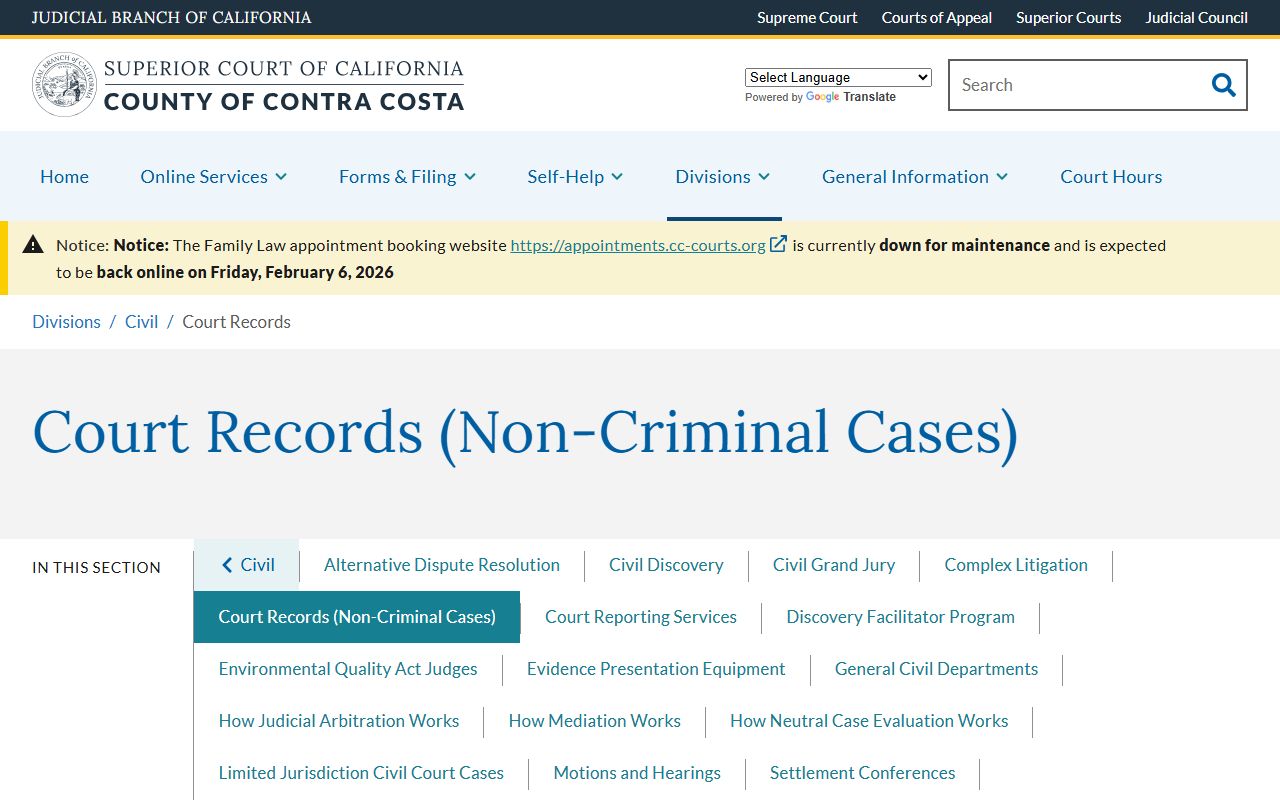
If you need a copy of a Richmond divorce decree, contact the Contra Costa County Superior Court. You can visit in person at 725 Court Street, Room 103, Martinez. Bring photo ID and the case number if you have it. If you do not know the case number, the clerk can search by party names and year. In-person requests often get processed the same day for recent cases. Older files may take a few days if they are stored off-site.
You can also request records by mail. Write to the Contra Costa County Superior Court, 725 Court Street, Room 103, Martinez, CA 94553. Include the case number or both party names and the approximate year of the divorce. Send a check or money order for $15 for a certified divorce decree. If you want other documents, add $40 per document for certification plus copy fees. Provide your return address and a phone number. Processing time for mail orders varies from one to four weeks depending on how busy the clerk's office is.
Only certain people can get divorce records. The two people who were married in the case can get their own records. Lawyers representing either party can obtain copies. Other people may need to show a legal interest or get a court order. The clerk will ask for identification to verify who you are. California law protects privacy in family law cases while still allowing public access to basic case information.
Finding Legal Help in Richmond
Contra Costa County offers free resources for people going through divorce without a lawyer. The court has a Family Law Facilitator who can answer questions about forms and procedures. The facilitator cannot give legal advice or represent you, but can help you understand what forms to file and how court hearings work. This service is free and available to anyone in a family law case.
Bay Area Legal Aid serves low-income residents of Contra Costa County. They provide free legal help in family law cases including divorce, custody, and support. To see if you qualify, visit their website at baylegal.org or call their intake line. They can help with paperwork, negotiations, and representation in court if you meet income guidelines.
The Contra Costa County Bar Association has a lawyer referral service. They can connect you with local attorneys who handle divorce and family law. Many lawyers offer a reduced-rate initial consultation. If you need ongoing representation, you can hire a lawyer for the full case or just for specific tasks like a hearing or settlement conference. Some people use limited-scope representation where the lawyer handles one part of the case while you do the rest yourself.
The California Courts Self-Help Center at selfhelp.courts.ca.gov has step-by-step guides for divorce. The site explains how to fill out forms, file them with the court, and serve them on the other party. You can download all forms for free. The website also has videos and FAQs that walk you through the process. All the information applies to Richmond cases since California uses the same forms and rules statewide.
Other Record Sources and Tips
For divorces that happened between 1962 and June 1984, the California Department of Public Health has a Certificate of Record. This is not the actual divorce decree but a short document showing the divorce occurred. It lists the names of both parties, the county, the filing date, and the case number. The fee is $18 and processing takes several months. CDPH does not have any divorce records after June 1984. You can get the application form at cdph.ca.gov.
After your divorce is final, you may need to update your records with other agencies. If you changed your name, notify the Social Security Administration and the California DMV. Update your name on bank accounts, credit cards, insurance, and any property titles. The court does not automatically send your divorce decree to these agencies. You must do it yourself using certified copies of the decree as proof.
Keep several certified copies of your divorce decree for your records. You may need them to change your name, apply for benefits, update insurance, or handle property matters. Each certified copy costs $15 from the court. It is easier to get multiple copies when you first request the decree than to go back later.